Professor Val Brunton retires
Val’s work in Lobular Breast Cancer began when she moved to the University of Edinburgh in 2007, following discussions with Professor David Cameron, a medical oncologist with a strong interest in Lobular. He encouraged Val to pursue research in this area, which closely aligned with her long-standing interest in E-cadherin.
E-cadherin is the glue that makes cancer cells stick together to form tumours. In Lobular, E-cadherin is missing and this results in the single file, spidery-web type pattern of growth in Lobular tumours.
Val says, “Over the years, one of the most inspiring aspects of this work has been engagement with the Lobular community across Europe and the United States. It is a highly supportive and collaborative network, and in recent years there has been significant progress in bringing together researchers, clinicians, and patients to drive advances in both clinical and basic research.”
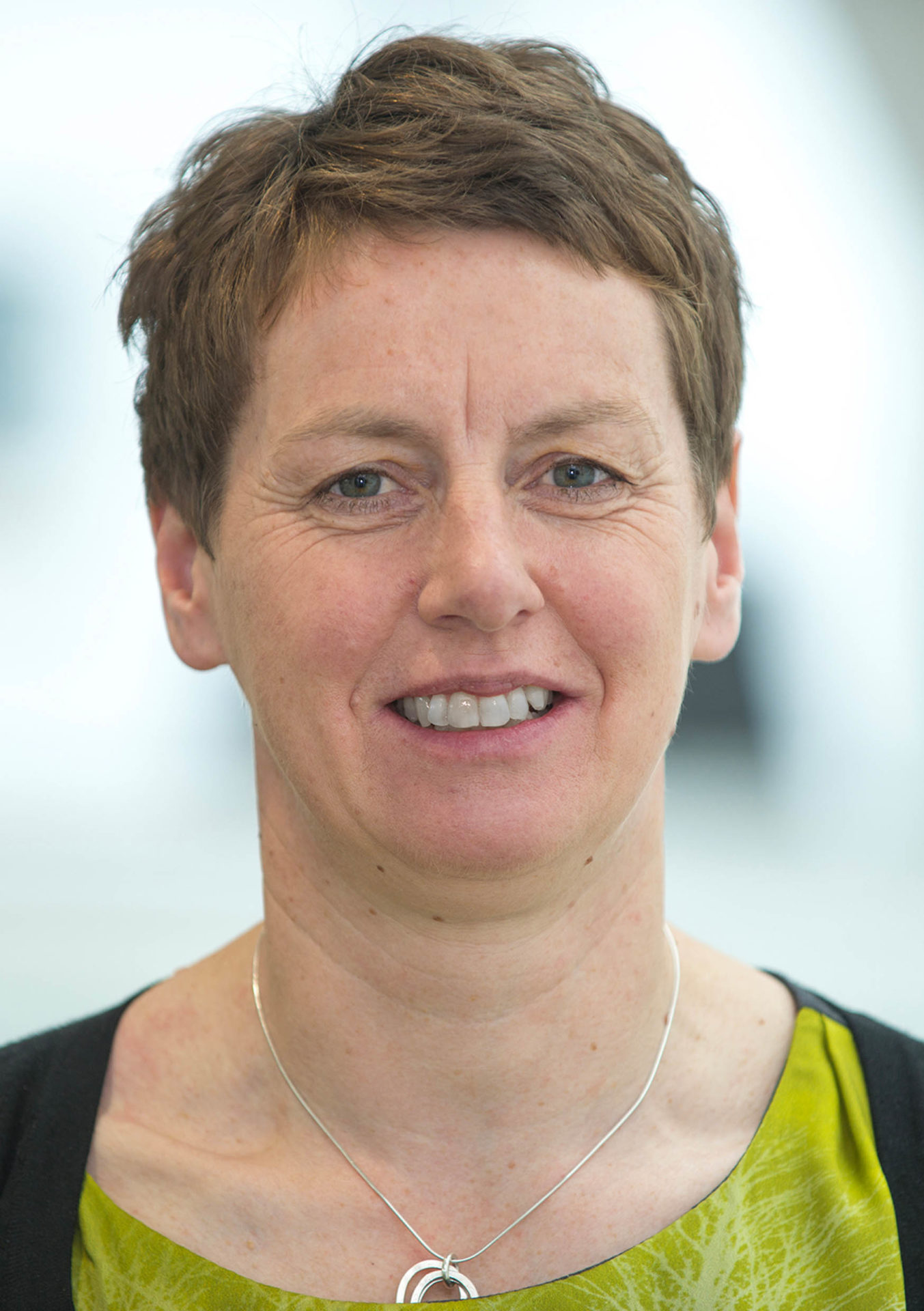
Val took an active role in the European Lobular Breast Cancer Consortium as a member of their Functional Biology Working Group and regularly spoke at the International Invasive Lobular Carcinoma Symposium.
“Patient advocacy in Lobular is particularly strong” continues Val, “and our collaboration at Edinburgh with LBCUK has been invaluable — helping to shape not only what we study, but also why it matters. I have had the privilege of working with many talented PhD students, who have greatly benefited from these interactions and one of my proudest achievements has been watching them grow, develop, and go on to accomplish their goals as research scientists.”
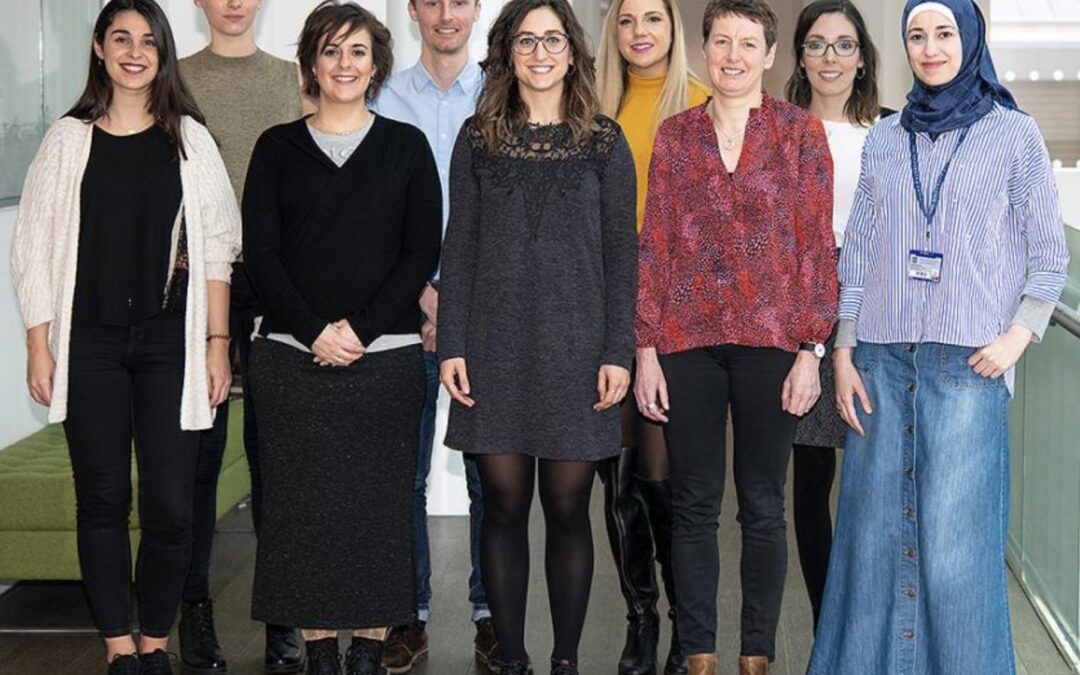
Esme Bullock did her Lobular focused PhD at the University of Edinburgh under Val and currently is a Postdoctoral Training Fellow at the Institute of Cancer Research. She says, “Val was a wonderful supervisor throughout my PhD and is an all-around great scientist. She was supportive, keeping me on track with my experiments and really pushing me in the right directions both in terms of lab work and career development and she encouraged me to get involved with patient advocates too! She has produced some incredible science in her career, and I am immensely grateful to have been in her lab and worked with her. I hope she enjoys an incredibly well-deserved retirement and gets to spend lots more time skiing and relaxing!”
Val is looking forward to retirement and will be taking some time to travel and be in the outdoors. When asked what she’ll miss about being a researcher, she said, “What I will miss most are the conversations — sharing ideas with colleagues, refining them, and turning them into meaningful research projects. Not every idea succeeds, but it is deeply rewarding when a project comes to fruition and you can see how it contributes to our understanding of the disease and helps to guide future research.”
Val was one of the very first people I connected with when starting to explore setting up LBCUK,” states Claire Turner, our Interim-CEO. “Val has been instrumental in developing our relationship with researchers and has always been so supportive of our work.
We all at LBCUK wish Val the very best in her retirement. We want to thank her for the incredible advancements she’s made in Lobular research and as well as giving generously of her time and expertise to sit on our Scientific and Medical Advisory Board.